You have tried to help a loved one who is abusing alcohol, drugs or gambling, and you are beginning to feeling frustrated, confused and hopeless? It seems that no matter how hard you try, things are not getting any better; on the contrary things seem to get worse, or even spiral out of control. Your loved one may be already dealing with some losses: employment, relationships, housing, possibly a lost driver’s license, or children apprehended by social services. There is an urgent need to intervene, and help improve the situation, however, it seems like you are the only one making an effort. The person with the problem, may be minimizing, justifying, or blaming others for their predicament.
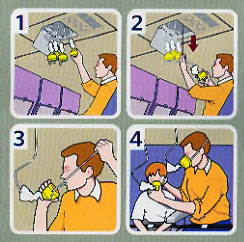
What can you do to help? Well, sometimes to be able to help others, we may first need to help ourselves.
You may choose to begin by asking yourself these questions:
- What do I do to make it easier for him/her to use/drink?
- What is in my control in this situation, and what is not?
- What are some of the things I had been trying to control, even though I know I can’t?
- What are some things I need to let go of?
- How have I enabled the problem to continue? How have I enabled the user?
- What are good and bad things about continuing/discontinuing to enable the user?
- What are my fears?
- How are my boundaries: healthy or unhealthy?
- Do I feel guilty a lot? Did I intentionally do damage to another person, or do I blame myself for something I am not responsible for.
- Do I learn from my mistakes, or do I keep repeating them?
- Do I take care of myself, look at myself with compassion and forgive myself ?
The chances are that if you have been in this situation for quite some time, you engaged in some unhealthy thoughts/feelings/behaviors. You might have experienced an overwhelming amount of unhealthy guilt, internalized some of the negative things addict had said to you, lacked healthy boundaries, engaged in power struggles, arguments, bribes and threats.
To be able to help the addict, you must first focus on healing yourself. You need to stop the guilty self-talk and replace it with appropriate affirmations. Unhealthy Guilt can make you feel over-responsible and over-sensitive. You need to develop a healthy set of core beliefs; let go of the distorted thinking about yourself and others. You also need to review and evaluate your expectations of yourself and others. All that you can do is changes your thoughts and behaviors, and as for the addict, he needs to “own” his attempts at change.
You can begin making a change by:
- taking care of ourselves
- creating and enforcing healthy boundaries
- differentiating between the person and the behavior (love the person, not their behavior)
- Getting support and information; Secrets Keep us Sick. Break the silence.
- Feeling and express our feelings – it is okay to be angry
- Recognizing and stop enabling behaviors
- Discontinuing to blame yourself for the addiction
- Remembering that you did not cause it, nor you can control or cure it.
More on Boundaries:
Healthy Boundaries are important to protect our wholeness or personhood. They are important to our mental health. They are limits that we set, borders indicating where we end and others begin. An emotional boundary governs our emotional needs, rights, and safety. This includes our rights to our own thoughts and actions and how much we choose to share with others. When setting a boundary it is important to communicate the boundary assertively, and set parameters around what happens if someone violates a boundary.
To communicate boundaries, it is important to use “I statements..”
I feel … (feeling) When you … (behavior); I need you to … (express your needs and wants); State consequences
For example,
I feel disrespected when you show up at a family function intoxicated. I need you to show up sober, or not at all. If you continue to show up drunk, I will stop inviting you.
To be able to address addiction issues, it is imperative that family members set healthy boundaries, and enforce them consistently. Without the boundaries, change will not happen, as the addict will continue to take advantage of us, and we’ll continue enabling them. Healthy boundaries are needed, so that we can protect ourselves, and let the addict know that we chose to disengage from the unhealthy interactions with them.
Below are examples of HEALTHY versus UNHEALTHY boundaries:
- Telling all/full disclosure vs considering the other person’s level of interest and caring before opening up
- Being overwhelmed by a person - preoccupied vs being able to “compartmentalize” other areas life and to continue to function in them.
- Going against personal values or rights to please others vs having values that are not negotiable in a relationship
- Not noticing when someone invades my boundaries vs Not allowing others to make decisions for me, or impose things on me, or force me into doing things I don’t want to do, or don’t feel comfortable about doing
- Giving as much as I can give/ giving my all vs My giving is not beyond what I can afford materially or emotionally
- Allowing someone to take as much as they can from me vs being aware of being taken advantage of and being willing to confront the other person about it.
- Letting others direct my life vs listen to opinions of others, but making the decisions for myself.
- Letting others describe my reality vs Assuming that my perception of what is going on is just as accurate as the other person’s in my relationship. I do not allow the other person to tell me how I feel.
- Letting others define me vs I know who I am. I am wary of people who criticize me or want me to be different.
- I respect myself as a person who is worthwhile. I believe I am in charge of my life. I take care of my body and my health as a part of my respect for me as a total person.
If you have healthy boundaries, you may:
- Feel free to say yes or no without guilt, anger or fear.
- Refuse to tolerate abuse or disrespect.
- Know when a problem is yours or another person’s
- Refuse to take on others’ problems.
- Have a strong sense of identity.
- Respect yourself.
- Share responsibility with others, and expect reciprocity in relationships.
- Feel freedom, security, peace, joy and confidence.
{ 0 comments… add one now }